Showing posts with label UK Railtour. Steam Tours. Show all posts

Tuesday, 30 November 2021

VICTORIA TO BATH AT CHRISTMAS - TORNADO STEAM RAILTOUR - TUESDAY 30th NOVEMBER 2021

Bath Christmas Markets 2021
Might be November still but there are plenty of Christmas trips being organised and markets, shopping in full swing with the festive season fast approaching, what better way to give yourself (and a loved one perhaps) an early present with a steam tour to one of England's stunning locations - Bath. 

London Victoria to Bath at Christmas(*)
Departure Date:
Tuesday 30th November 2021
(*) yes I know it's November still, and Christmas is some way off. 
Departing from, with approximate departure times:
London Victoria (d 08:45), Staines (d 09:30), Woking (d 10:10)
>> Arrival at Bath Spa due 13:05.

Travel to the stunning roman city of Bath and explore its many museums and places of interest. It has some of the very finest architectural sights in Europe including the Roman Baths and Pump Room, Pulteney Bridge, the Abbey and Royal Crescent.

BATH CHRISTMAS MARKET
We are aware that the official Bath Christmas Market will not be going ahead this year in its usual format. However, there are still plenty of ways to enjoy the festive period in one of the UK's most iconic Christmas cities. Some of the wonderful activities on offer will include a Christmas light trail taking you on a journey to some of Bath's most iconic architecture, Bath's artisan makers showcasing their crafts around Bath Abbey Quarter and Queen Square, and Luke Jerram's global phenomenon, Museum of the Moon, will be the centrepiece of Bath Abbey. 

Bath’s biggest independent market returns this Christmas! After a break of nearly two years, Bath’s biggest and favourite independent artisan market is back and running every day from the 20th November to the 19th December. Put your skates on and have go on the Ice at the Royal Victoria Park. 
The Ice Rink is back and, with 1000 square metres of smooth ice, it’s bigger than ever! Glowing in an array of atmospheric lights, it’s the ideal spot to practice those skating skills and simultaneously the perfect stage for avid skaters to show off their moves. With music to set the wintery scene, a cozy bar area and seasonal drinks you will be transported to a dreamy winter wonderland!
Or how about a round of 'Glow Golf' located next door to the Ice rink. Bath’s popular adventure golf course will be decked out with its very own fairy light installations. Playing golf at night with glow-in-the-dark balls adds a whole new layer of excitement to the classic daytime experience.

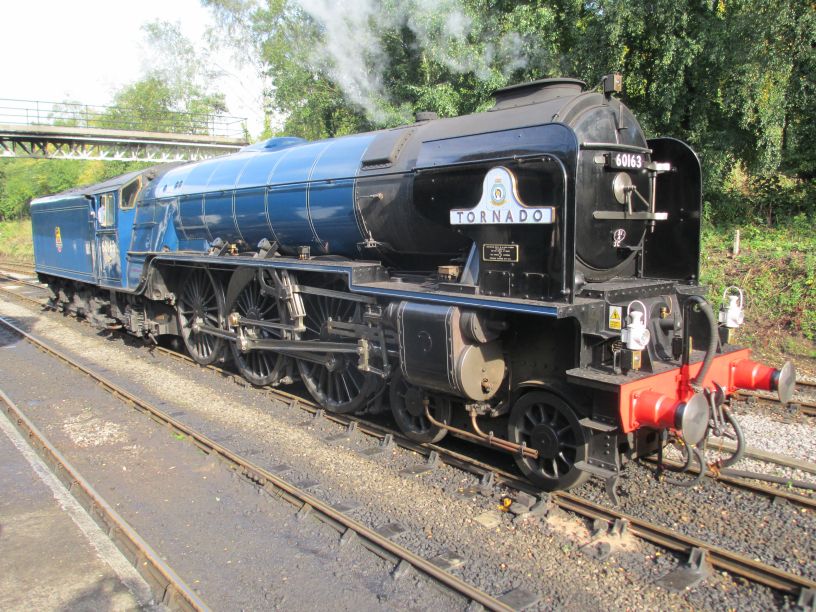
Steam Hauled by A1 Class Pacific '60163 Tornado'
60163 Tornado is the newest steam engine on the national network (at time of writing). The original Peppercorn A1 series were ordered by the LNER, but the 49 locomotives were built at Doncaster and Darlington for British Railways (BR) in 1948–49, after the nationalisation of the railways in the United Kingdom. Following the modernisation and dieselisation plans of the 1950s, the A1 Peppercorn class was eventually scrapped at a comparatively early age of just 15 years.

The original Peppercorn A1s were designed to cope with the heaviest regular post-war East Coast trains. First steamed in 2008, after a 19 year project to fund and build the locomotive, Tornado was built to be not a replica, but the 50th A1. The original 49 A1s were built for the London & North Eastern Railway (LNER) between 1948 and 1949. Sadly after the withdrawal of steam in 1968 none of the LNER A1 class engines were saved from the scrapper's torch. In 1990 a group of enthusiasts founded a trust (A1 Steam Locomotive Trust) to return this missing link.

Tornado moved under its own power for the first time on 29th July 2008 at Darlington, and then spent two months at the Great Central Railway in Loughborough, where it was tested up to 60 mph (97 km/h) and operated its first passenger train. Tornado then moved to the National Railway Museum (NRM) in York for three test runs on the main line up to 75 mph (121 km/h). After repainting from works grey into LNER Apple Green, Tornado was approved for mainline passenger operation. On 31st January 2009 Tornado hauled its first passenger trip on the main line, The Peppercorn Pioneer, from York to Newcastle and back. By hauling various A1 Trust railtours, charters and other activities, Tornado will begin to recoup the estimated £800,000 debt from the project, which cost around £3 million.

Tornado has 3 cylinders, 6 driving wheels and a firebox of 50sq.ft. Tornado is a regular locomotive for Steam Dreams, often seen on trips along the East Coast Mainline to York. Whilst limited to 75 mph today, A1s are capable of achieving speeds in excess of 100mph. During its short life Tornado has twice hauled the Royal Train.

Saturday, 25 September 2021

THE JOLLY FISHERMAN - FLYING SCOTSMAN RAILTOUR - SATURDAY 25th SEPTEMBER 2021

 Flying Scotsman - The Jolly Fisherman tour

The Jolly Fisherman
 - Saturday 25th September 2021

Ride behind the famous Flying Scotsman on this unusual tour to the east coast of England and the popular seaside resort of Skegness. We plan to recreate the Jolly Fisherman experience that was a popular excursion planned by the Great Northern Railway. We will head northwards from London’s King’s Cross station with the world famous Flying Scotsman hauling us along the East Coast main line to Peterborough, Boston and then to Skegness. With contrasting scenery all the way, what better way to spend the day than travelling on a traditional seaside express to the bracing east coast.

We leave London King’s Cross in the morning, and head northwards along the ECML, picking up at Potters Bar, Stevenage and Peterborough. Here, we leave the ECML at Werrington Junction and head across rural Lincolnshire along the former Great Northern line towards Spalding, a town noted for its flower growing industry. We continue along the Great Northern & Great Eastern Joint line via Helpringham to the market town of Sleaford, where we will pause to run round our steam locomotive.  

Flying Scotsman 60103

Following a reversal, we now head eastwards along the former Great Northern line towards Boston, noted for its famous landmark of St Botolph’s church, otherwise known as the Boston Stump.  We take the remaining section of the former East Lincolnshire line that once went through to Louth and Grimsby, but now it only runs as far as the junction at Firsby with the Skegness line. The line is very straight and flat for miles and is pleasantly rural in outlook as we head for Firsby, where there is a sharp curve towards Skegness all that is left of the remaining side of a former triangular junction. We will make a stop at Wainfleet should you wish to visit this attractive town with its interesting Batemans Brewery visitors centre. It is then just a short distance to our afternoon destination at Skegness. Time will be available to visit the resorts many attractions, including the promenade, the clock tower and the Jolly Fisherman statue and fountain. There are ample restaurants and many typical seaside shops to visit, or just have a quiet stroll along the sea front.

After an afternoon in Skegness, we will retrace our earlier route back to Sleaford, where we will continue to Grantham and join the ECML. After a spirited climb up to Stoke tunnel, we now head for Peterborough, before heading back to London, setting down at our outward calling points. We can expect some fast running from Flying Scotsman as she runs up to her maximum speed along the ECML. Our arrival back in London King’s Cross will reluctantly bring to an end a splendid day out to the seaside on the Jolly Fisherman Express.

Flying Scotsman info;

60103 Flying Scotsman has been described as the most famous steam locomotive in the world. Built in 1923 for the London and North Eastern Railway (LNER) at Doncaster Works to a design of H.N. Gresley, it was employed on long-distance express trains on the LNER and its successors, British Railways Eastern and North-Eastern Regions, notably on the London to Edinburgh Flying Scotsman train service after which it was named.

The locomotive set two world records for steam traction, becoming the first steam locomotive to be officially authenticated at reaching 100 miles per hour on 30 November 1934, and then setting a record for the longest non-stop run by a steam locomotive when it ran 422 miles on 8 August 1989 while in Australia. Retired from regular service in 1963 after covering 2,076,000 miles, Flying Scotsman gained considerable fame in preservation under the ownership of Alan Pegler, William McAlpine (seen below), Tony Marchington and finally the National Railway Museum (NRM). As well as hauling enthusiast specials in the United Kingdom, the locomotive toured extensively in the United States and Canada (from 1969 to 1973) and Australia (from 1988 to 1989).

Approximate Train Times


Thursday, 9 September 2021

THE SWANAGE BELLE - LONDON VICTORIA -> SWANAGE [Thursday 9th September 2021]

Swanage Belle

The Swanage Belle
  Thursday 9th September 2021

A unique experience awaits those who join this day trip by steam train to Swanage. It uses the re-opened rail link from Wareham to the ‘Heritage’ Swanage Railway, which is available only to specially chartered trains. Swanage is a superb seaside destination where the railway station is situated close to the town centre.

Steam hauled, Black 5 [44871]
London Victoria (dep 08:45) - Staines (pu) - Woking (pu) - Basingstoke (pu) - Swanage

Return under Diesel from Swanage (pu) - Southampton Central.

Then Steam hauled again from Southampton Central - Redbridge - Romsey - Andover - Basingstoke (sd) - Woking (sd) - Staines (sd) - London Victoria

Due to leave London Victoria station at around 08:45, hauled by our LMS Black 5 steam locomotive [No 44871], and cross the river Thames at Battersea and at Barnes. We pass through Feltham and stop at Staines to pick up more passengers and then re-cross the river Thames. We join the South Western Main Line at Byfleet Junction and stop at Woking to pick up further passengers. At Winchfield, we stop for our steam locomotive to take on water. Our final stop to pick up passengers is at Basingstoke. 

THE SWANAGE BELLE - LONDON VICTORIA -> SWANAGE

We leave the West of England Main Line at Worting Junction and head through Winchester and Southampton to Bournemouth. We pass through Poole, where there are spectacular views of Poole Harbour, and continue to Wareham. We leave the Weymouth Line at Worgret Junction and take the re-opened link to Norden and the Swanage Railway. There are magnificent views of Corfe Castle as we head towards Swanage along this attractive Heritage Railway. There will be more than three hours for passengers to explore the pleasant seaside resort of Swanage, with its sandy beach and Victorian pier. Durlston Castle is in Durlston Country Park & Nature Reserve from where there are stupendous views along the Jurassic Coast, a UNESCO World Heritage Site. The Park contains Anvil Point Lighthouse, the 40-ton stone Great Globe, fascinating artefacts from London, and an amazing diversity of wildlife. The Park is one mile from the town and can be reached by bus from the railway station or by walking via public footpaths. 

Our train leaves Swanage for the return journey at around 16:55 and is diesel hauled to Southampton where our steam locomotive takes over. We then take a different route from the outward journey, via Romsey to the outskirts of Salisbury where we join the West of England Main Line at Laverstock North Junction. We travel up the main line through Andover and then stop at Basingstoke, Woking, and Staines, to set down passengers. The train is due to arrive in London Victoria soon after 23:00.

Train Times

Swanage Heritage Railway
Stations located at Swanage, Herston Halt, Harmans Cross, Corfe Castle and Norden, with a connection to the National Main Line network to Wareham which hopefully will be a regular operation from 2022?

To look at it now, you would never believe that the Swanage Railway has been rebuilt from nothing since 1976 – after almost seven miles of the line was demolished in 1972. The volunteer-led heritage railway that you see today has been the work of several generations of dedicated railway and community volunteers.

Swanage Railway with Corfe Castle in background
Now contributing more than £15 million a year to the Isle of Purbeck economy, the Swanage Railway was demolished in just seven weeks and it took volunteers 30 years to relay it. After the line to Corfe Castle Swanage was closed and demolished in 1972, British Rail ran oil, clay and gas trains to Furzebrook – on the remaining three-mile stub of the branch line – until 2005. A signalled connection between the Swanage Railway and the national railway network near Furzebrook came into use from 2007 with the first excursion trains running from London to Corfe Castle and Swanage during 2009. The summer of 2017 saw the Swanage Railway run a 60-day trial diesel train service from Swanage and Corfe Castle to the main line at Wareham. Sadly Covid brought an interruption to plans to run more regular services to Wareham itself but hopefully that will be something to look forward to in the near future.

Thursday, 12 August 2021

THE ABERDONIAN STEAM RAILTOUR [A1 No 60163 Tornado] - Thursday 12th August

A1 Class Tornado

The Aberdonian Steam Railtour (A1 Steam Locomotive Trust)
Steam hauled by Class A1 No 60163 Tornado (Pictured above)

60163 Depart; Edinburgh Waverley @09:39(pu) - Forth Bridge - Kirkcaldy - Perth - Dundee - Montrose - Aberdeen.

Let the ‘The Aberdonian’ whisk you away as we take in some of the best that Scotland has to offer, both on train and off. Crossing the Forth Bridge, the train runs along the coast for much of its route making it an unrivalled way to experience Scotland. In Aberdeen there is a chance to explore this historic city, or take one of our off train excursions that include a castle or distillery visit. On board the train you can sit back in comfortable seats and large windows through which to admire the scenery. Our friendly team will look after you, and if you choose to dine with us you will be treated to fine Scottish fare. Come and travel with us as Tornado runs regularly over this historic route.

Forth Bridge

Our journey begins in Scotland’s capital and its imposing Waverley station, right in the heart of the city, in the shadow of the Castle. Tornado steams through Princes Street Gardens and pauses to pick up further passengers at Haymarket station in the west of the city. From there we leave the city surroundings and pass open countryside before our train will start to slow. The Forth Bridge is one of the wonders of the modern world, and a UNESCO World Heritage Site, crossing over 350ft above the water and stretching over one and a half miles in length. First opened in 1890, Tornado will lead our train across this magnificent structure giving amazing views of the Firth of Forth and we cross into the Kingdom of Fife. The railway follows the coast line through Inverkeithing and Burntisland where the city of Edinburgh can be seen across the Forth. Approaching Kirkcaldy the route turns north whilst remaining alongside the coast, but once we leave the town behind we move into the rich countryside of Fife with its farming communities and many golf courses.

Tornado decked out in BR Blue
The route is then via Perth and follow the route of the River Tay to Dundee.  Our departure from Dundee is through tunnels under the city, and we exit the city and head alongside the River Tay out as far as the world-famous golf course of Carnoustie. We then continue alongside the river as we make our way eastwards passing the coastal town of Arbroath, famous for its Smokie’s which are still produced in the town. Our route takes switches from running along the coast to diving inland and back again before crossing the Montrose Basin with the railway sandwiched between the water and Montrose itself. As we leave Montrose behind we are running through the stunning Scottish countryside as we leave the coast behind for a while. Passing through Laurencekirk and Fordoun and Drumlithie it is a chance to see the lush and unspoiled country for which Scotland is rightly proud.

The service will depart from Edinburgh Waverley  9:39am and the return will get you back into the capital late evening so a long day of touring and plenty of value for money around some of the best scenery on offer.

Steam Hauled by A1 Class Pacific '60163 Tornado'
The original Peppercorn A1 series were ordered by the LNER, but the 49 locomotives were built at Doncaster and Darlington for British Railways (BR) in 1948–49, after the nationalisation of the railways in the United Kingdom. Following the modernisation and dieselisation plans of the 1950s, the A1 Peppercorn class was eventually scrapped at a comparatively early age of just 15 years.

The original Peppercorn A1s were designed to cope with the heaviest regular post-war East Coast trains. The A1 Trust intended Tornado to be built from scratch, designed and built as the next locomotive in the A1 Peppercorn class, not as a replica or restoration project, but an evolution of the class incorporating design improvements that would have occurred had steam motive power continued on the mainline railway.
  
Tornado moved under its own power for the first time on 29th July 2008 at Darlington, and then spent two months at the Great Central Railway in Loughborough, where it was tested up to 60 mph (97 km/h) and operated its first passenger train. Tornado then moved to the National Railway Museum (NRM) in York for three test runs on the main line up to 75 mph (121 km/h). After repainting from works grey into LNER Apple Green, Tornado was approved for mainline passenger operation. On 31st January 2009 Tornado hauled its first passenger trip on the main line, The Peppercorn Pioneer, from York to Newcastle and back. By hauling various A1 Trust railtours, charters and other activities, Tornado will begin to recoup the estimated £800,000 debt from the project, which cost around £3 million.

Wednesday, 4 August 2021

THE FELSMAN - SETTLE & CARLISLE STEAM RAILTOUR - WEDNESDAY 4th AUGUST 2021

SETTLE & CARLISLE FELLSMAN
Wednesday 4th August 2021

The popular ‘Fellsman’ runs again in summer 2021 for its 13th season offering a 300-mile return steam hauled journey from Crewe on the spectacular ‘Settle to Carlisle Railway’ as we travel through the Yorkshire Dales and climb high towards the roof of England. With its great limestone peaks and deep valleys, the legendary ‘Settle to Carlisle’ line is a masterpiece of Victorian engineering including the magnificent 24 arch viaduct at Ribblehead. Time will be available for sightseeing in the historic border city of Carlisle.

DEPARTING FROM;
CREWE, WARRINGTON BANK QUAY, WIGAN NORTH WESTERN, LEYLAND, BLACKBURN, CLITHEROE, HELLIFIELD

The Settle & Carlisle line is known for its magnificent scenery and steep gradient, so our engine will be working hard as we climb to the magnificent Ribblehead Viaduct with stunning views of the three peaks. Passengers get a marvellous view down Dent Dale as the train emerges from Blea Moor tunnel and approaching Garsdale you will see sweeping views of Wensleydale – with our engine in full flight we climb at 1 in 100 towards the summit of the line at Ais Gill. Travelling on through the lush Eden Valley to the historic border city of Carlisle where we arrive about 13.10. You may choose to stroll between the castle and cathedral or perhaps visit the famous Tullie House Museum – all surrounded by great places to shop, eat or be entertained so creating the perfect way to spend an afternoon.

Returning from Carlisle about 15.45 and following a stop for water at Appleby we travel over the same spectacular route giving another opportunity to experience the beauty of the high Pennines and pretty Ribble Valley as our locomotive works hard up the steep and taxing climb of Wilpshire Bank being a fitting end to a perfect day.

Steam hauled by one of the train operators preserved locomotives;

West Country Class 4-6-2 No. 34046 Braunton


West Country Class 4-6-2 No. 34046 Braunton
History
built at Brighton Works in November 1946 in original streamlined form and upon completion was allocated to Exmouth Junction. Further allocations included Salisbury, Brighton and Bournemouth. In 1949 the engine was re-numbered to 34046 once owned by British Railways.
Withdrawal and preservation
34046 was withdrawn from service in October 1965 and moved to the Woodham Brothers' scrapyard at Barry Island, this was to be the engine's home for the next 23 years until it was moved in 1988 to Brighton in a bid to be restored. In 1996 it was purchased by the West Somerset Railway but later sold on to a private individual. The engine was moved to Williton on the WSR where a long term restoration to running order was to be undertaken. 34046 returned to steam in July 2007 for the first time in the 42 years since its withdrawal from service. The engine's debut return to passenger service was in 2008 with plans to have the engine certified for use on the mainline hauling excursion trains. Since 2018 it was based in Crewe and owned by Jeremy Hosking. 34046 is operational on the mainline hauling excursion trains.

45231 The Sherwood Forester
A member of the iconic London Midland & Scottish Railway's Black 5 Class, The Sherwood Forester is a shining example of the workhorses of Britain's railways from the 1930s all the way to the end of steam. 
After being initially preserved at Carnforth, 5231 became associated with the preserved Great Central Railway (GCR) in Leicestershire. 45231 emerged from an overhaul in 2005 and shortly after it was moved by road to the Mid Hants Railway. It eventually undertook a proving run on Sun 26 Jun from Alton to Fratton before entering mainline service later in the year. 

ENGLISH RIVIERA EXPRESS STEAM RAIL TOUR - SUNDAY 26th JULY 2020
46100 'Royal Scot'
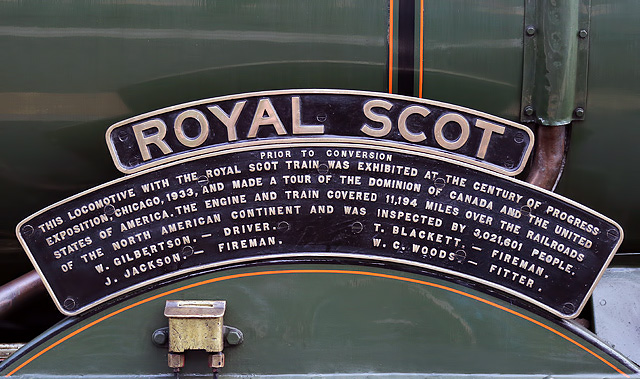
One of our immaculately restored locomotives; LMS Royal Scot Class, No.46100 ‘Royal Scot’ is on the roster to be available for this tour. 


History / Preservation Notes

The original 6100 was the first of its class, built in 1927 by the North British Locomotive Company in Glasgow. It was named Royal Scot after the Royal Scots.  In 1933, 6152 The King's Dragoon Guardsman and 6100 swapped identities permanently. 6152 had been built at Derby Works in 1930. The new Royal Scot was sent to the Century of Progress Exposition of 1933 and toured Canada and the United States with a train of typical LMS carriages.  46100 was bought by Billy Butlin of Butlins holiday camps after withdrawal and after cosmetic restoration into LMS crimson lake at Crewe Works, although this was the original livery received, the locomotive did not carry it after being rebuilt (only one rebuilt Royal Scot ever carried LMS crimson lake livery and that was 6170 British Legion). It was then towed from Crewe Works to Nottingham by Black 5 No. 45038 and then from Nottingham to Boston by B1 No. 61177 on 12 June 1963.  Royal Scot arrived at Butlins on 18 July 1963 piped in by pipers from the 1st Battalion, The Royal Scots. This made 6100 one of two preserved rebuilt Royal Scots, the other being 6115 Scots Guardsman. It was set on a plinth at Skegness and was to remain there till the 1970s. On 16 March 1971 6100 departed from Skegness for the Bressingham Steam Museum and was returned to steam in 1972. It ran until 1978 when it once more became a static exhibit, it was eventually sold from Butlins to Bressingham in May 1989.

Fellsman Steam Train Times

Saturday, 24 July 2021

THE WEST SOMERSET STEAM EXPRESS - SATURDAY 24th JULY 2021

THE WEST SOMERSET STEAM EXPRESS

The West Somerset Steam Express

This series of trains from London Paddington to Minehead features haulage by two steam locomotives in one day. An express steam locomotive will haul our train from London Paddington to the West Somerset Railway at Bishops Lydeard. The Heritage Railway will then provide two steam locomotives to haul our train to Watchet and back. This provides a truly fascinating day out travelling through beautiful scenery to the Bristol Channel coast.

Jubilee class steam locomotive No.45596 Bahamas
Scheduled to leave London Paddington at around 08:05, steam hauled by Jubilee class steam locomotive No.45596 Bahamas (pic right) and stop at Slough and Reading to pick up more passengers. At Reading we join the Berks and Hants line which runs through picturesque rural countryside, passing the celebrated Newbury Racecourse before making our final stop for passengers at Newbury station. We continue westwards, travelling beside the tranquil Kennet & Avon Canal, and climbing steadily to Savernake Summit. We pass through the Vale of Pewsey, with views of one of the famous Wiltshire White Horses as we approach Westbury and continue through undulating agricultural countryside to Taunton.

Soon after leaving Taunton, we shall arrive at Norton Fitzwarren, where we transfer to the West Somerset Railway (WSR), the longest Heritage Railway in the country. We continue to Bishops Lydeard, where two WSR steam locomotive will take over our train for the remainder of the journey to Watchet. The WSR runs along the edge of the Quantock Hills between Bishops Lydeard and Watchet where it meets the coast. From here passengers will have the option of remaining in Watchet for the afternoon, or travelling to either Dunster or Minehead by coach.

West Somerset Railway Minehead
On arrival at Minehead, there will be around two hours to explore this delightful Bristol Channel seaside resort, where the railway station is close to the beach. Passengers will then return by coach to Watchet from where two WSR steam locomotives will haul our train back to Bishops Lydeard, where our main line steam locomotive will take over for the return journey to London Paddington.

ROUTE + TIMETABLE (BELOW)
[45596 Bahamas] London Paddington (pu) - Slough (pu) - Reading (pu) - Newbury (pu) - Westbury - Taunton - Bishops Lydeard [WSR Steam TBA] Bishops Lydeard - Minehead
[WSR Steam TBA] Minehead - Bishops Lydeard  [45596 Bahamas] Bishops Lydeard - Taunton - Westbury - Newbury (sd) - Reading (sd) - Slough (sd) - London Paddington

Steam Tour Timings

West Somerset Railway

About The West Somerset Railway
https://www.west-somerset-railway.co.uk/
The West Somerset Railway a true country branch line of the old Great Western Railway is full of fascination whether you are looking for a nostalgic ride back in time through lovely countryside or to study the railway and industrial heritage which our line preserves. The historic steam locomotives, coaches and wagons, and the buildings of our ten unique stations linked by a twenty mile scenic journey will repay hours of exploration. The surrounding countryside is as varied as it is beautiful.
West Somerset Railway
The gently rolling Quantock hills and distant Exmoor, unspoilt villages and farms nestling in leafy lanes, the cliffs and coast of the Bristol Channel with views of distant South-Wales, confident Church Towers, Dunster's imposing castle and Minehead's seaside charm are all waiting to be discovered. Honestly you would want to spend a weekend here to enjoy it all. It's come a long way since I used to visit here with my late father in the 1980's, and even sees occasional services through from Taunton now that the line is connect to GWR main line once more. Though regular steam services are still from Bishops Lydeard station through 20 miles of scenery to Minehead.

Thursday, 15 July 2021

THE CHESHIREMAN - London Euston to Chester A1 Class 60163 Tornado

The Cheshireman
  - Thursday 15th July 2021

A1 Class Tornado 60163
Steam Hauled realtor, London (Euston) to Chester with A1 Class locomotive 60163 Tornado.
Route
London Euston (pu) - Watford Junction (by service train to Milton Keynes) (pu) - Milton Keynes Central (pu) - Northampton (pu) - Rugby (pu) - Nuneaton (pu) - Stafford - Crewe - Chester and return.

This tour offers a wonderful opportunity to travel by a special charter train to the historic city of Chester. The train will be steam-hauled throughout from London Euston to Chester by A1 Class locomotive No. 60163 Tornado. We will follow the route of the famous express such as the Royal Scot along the west coast main line (WCML) to Crewe and then onwards to Chester. We can expect some spirited running down the WCML to Crewe. Be sure to book early to join us on this historic occasion.

‘The Cheshireman’ will leave London Euston at around 07:00 steam hauled behind Tornado. Initially on departure we shall hear our locomotive working hard on the climb up Camden Bank. We continue through Watford Tunnel into rural Hertfordshire. We stop to pick up further passengers at the 1960s ‘new town’ of Milton Keynes, where passengers from Watford Junction will join by service train. At Hanslope Junction, we leave the West Coast Main Line (WCML) and take the Northampton loop line where we stop again for passengers.

We continue northwards and pass the Daventry Railfreight Terminal (DIRFT) before re-joining the WCML at Rugby, a further pick up stop, and the birthplace of rugby football and the jet engine. We then follow the Trent Valley Line to Nuneaton, our final stop to pick up passengers. We pass through Lichfield, notable for its three-spired medieval cathedral, and soon after Rugeley is Shugborough Tunnel. This has ornamental grand entrances, the result of conditions required by the Earl of Lichfield for building the line across his estate. We continue northwards through Stafford to the famous railway junction town of Crewe where we take the North Wales Coast Line to Chester.

Tornado in BR Blue livery
There will be around four hours to explore the Roman city of Chester, one of the most visited places in the UK. Chester lies on the river Dee, close to the border with Wales, and is one of the best preserved walled cities in Britain. The city contains a number of medieval buildings and is famous for its 14th Century ‘Rows’, the first floor level galleried walkways connecting shops and cafes. Other places of interest include the Castle, the Cathedral, and the picturesque racecourse, which is located between the city walls and the river Dee.

Our special train, hauled on the return journey by our steam locomotive Tornado, leaves Chester late afternoon for the return journey to London Euston. We stop at the same stations as on the outward journey to set down passengers, and this tour promises to be one of excitement as Tornado is allowed to reach its maximum permitted speed along the WCML.

Steam Hauled by A1 Class Pacific '60163 Tornado'
The original Peppercorn A1 series were ordered by the LNER, but the 49 locomotives were built at Doncaster and Darlington for British Railways (BR) in 1948–49, after the nationalisation of the railways in the United Kingdom. Following the modernisation and dieselisation plans of the 1950s, the A1 Peppercorn class was eventually scrapped at a comparatively early age of just 15 years.

The original Peppercorn A1s were designed to cope with the heaviest regular post-war East Coast trains. The A1 Trust intended Tornado to be built from scratch, designed and built as the next locomotive in the A1 Peppercorn class, not as a replica or restoration project, but an evolution of the class incorporating design improvements that would have occurred had steam motive power continued on the mainline railway.
  
Tornado moved under its own power for the first time on 29th July 2008 at Darlington, and then spent two months at the Great Central Railway in Loughborough, where it was tested up to 60 mph (97 km/h) and operated its first passenger train. Tornado then moved to the National Railway Museum (NRM) in York for three test runs on the main line up to 75 mph (121 km/h). After repainting from works grey into LNER Apple Green, Tornado was approved for mainline passenger operation. On 31st January 2009 Tornado hauled its first passenger trip on the main line, The Peppercorn Pioneer, from York to Newcastle and back. By hauling various A1 Trust railtours, charters and other activities, Tornado will begin to recoup the estimated £800,000 debt from the project, which cost around £3 million.

Friday, 9 July 2021

'THE END OF SOUTHERN STEAM' RAILTOUR - FRIDAY 9th JULY [LONDON VICTORIA - WEYMOUTH]

This day trip by steam train provides a unique opportunity to visit the Yeovil Railway Centre and the popular seaside resort of Weymouth for the afternoon. This special train to mark the anniversary of the end of Southern steam will be hauled by a powerful ex-Southern Railway Pacific type steam locomotive from London Victoria to Yeovil. We continue to Weymouth diesel hauled before our steam locomotive hauls us back to London Victoria via Bournemouth. Steam power is expected to be provided by Merchant Navy Class 35018 British India Line.

Our journey to Weymouth commences from the former joint London, Brighton and South Coast Railway and the London, Chatham and Dover Railway’s Victoria terminus. We thread our way through Clapham Junction and cross the Thames at Barnes Bridge, and take the Hounslow loop to Staines. We will pass Woking before pausing for water at Winchfield. We then head through Basingstoke to Worting Junction, were we will take the London & South Western Railway’s main line to Andover and Salisbury. 

Leaving Salisbury, at Wilton Junction the line becomes single track. We cross the edge of Salisbury Plain and pass through an Area of Outstanding Natural Beauty at Tisbury and Gillingham in Dorset. We cross Gillingham Viaduct and pass through Buckhorn Weston Tunnel before Templecombe, where once the iconic Somerset & Dorset Railway passed beneath our line. Travelling westwards through north west Dorset we pass through Sherborne, one of the most beautiful towns in England, before continuing with the train to Yeovil Junction where the steam locomotive will be serviced at the Yeovil Railway Centre.

Our train leaves Yeovil Junction, hauled by a diesel locomotive, and runs southwards through Maiden Newton towards Dorchester to the large seaside resort of Weymouth. There will be a break here to visit the town, with its many attractions and restaurants, before we return to London Victoria steam hauled.

Our return route will be via Bournemouth, Southampton and Eastleigh back to Basingstoke and Woking to set down passengers, followed by journey’s end at London Victoria.

Outward Journey > London Victoria (pu) - Weybridge - Woking (pu) - Basingstoke - Salisbury (sd) - Sherborne (sd) - Yeovil Railway Centre.
[Break for visit at Yeovil Railway Centre]
Yeovil Junction (pu) - Maiden Newton - Dorchester - Weymouth.
Return Journey > Weymouth (pu) - Poole - Bournemouth - Southampton Central - Basingstoke (sd) - Woking (sd) - Weybridge - London Victoria

SR Merchant Navy Class 35018 British India Line

35018 British India Line is a preserved SR Merchant Navy Class steam locomotive built by the Southern Railway in 1945. British India Line was one of the first batch of twenty completed at Eastleigh Works in May 1945, and in that month was first retained at Nine Elms shed, where it was to remain for most of its career, under both the Southern Railway and British Railways. On 24 November 1960 it was briefly re-allocated to Bournemouth's 71B shed, but in January of the following year it returned to Nine Elms 70A shed. 35018 was withdrawn from service in August 1964 and sold on to Woodham Brothers scrapyard in Barry, South Wales where it arrived in December of the same year. It was rescued from the scrapyard in November 1979, but work to restore the locomotive began only in 2012 and British India Line ran again under its own steam on the mainline in May 2017.

NB the route originally showed as departing from London Waterloo but we will try and verify this starts and ends from Victoria.

The Yeovil Railway Centre is a small railway museum at Yeovil Junction on the L&SWR West of England Main Line between Salisbury and Exeter in the U.K. It was created in 1993, in response to British Rail's decision to remove the turntable from Yeovil Junction. Approximately ¼ mile of track along the Clifton Maybank spur is used for demonstration trains. The site contains a G.W.R. transfer shed built in the 1860s, which was erected to facilitate the transfer of goods from 7 ft (2,134 mm) broad gauge to 4 ft 8+1⁄2 in (1,435 mm) standard gauge freight wagons. This is the last remaining shed of its type on its original site and has been converted to a visitor centre. The site also has an S.R. turntable and a 15,000 gallon water tower. These have been restored to working order for the servicing of steam locomotives.

Monday, 7 June 2021

FLYING SCOTSMAN - KINGS CROSS to YORK - THE WHITE ROSE TOUR

Flying Scotsman on tour

The White Rose tour with Flying Scotsman
Saturday 19th June 2021

Join the tour for an exhilarating main line steam run from London’s King’s Cross to the historic city of York. York is world famous for its variety of visitor attractions and home to the National Railway Museum. Our train will be hauled from London to York by steam locomotive No.60103 Flying Scotsman and will be diesel hauled for the return journey back to London.

We leave London King’s Cross in the morning behind Flying Scotsman and follow the East Coast Main Line route of famous express trains of the past. We storm up the gradient through Gasworks Tunnel and Finsbury Park, and northwards, calling at Stevenage, Huntingdon and Peterborough to pick up more passengers.

Our famous steam locomotive then tackles the 15-mile climb up the famous Stoke Bank. Here on 3rd July 1938, “Mallard”, an A4 class ‘Pacific’, achieved a world record speed of 126 mph when travelling in the opposite direction. Once over the summit we should have a good, fast run down the 20 mile descent to the Trent Valley and on through Grantham, Newark and Retford. We steam through Doncaster and continue northwards to our mid-day stop in York.

There will be plenty of time for passengers to enjoy the city and all it has to offer. York has some major tourist attractions including the National Railway Museum, the largest museum of its type in Britain; the Castle; the Shambles; the splendid Gothic York Minster, one of the largest of its kind in northern Europe; and the city walls. There are a number of other interesting museums, quaint alleyways, and a good variety of shops.

The train leaves York late afternoon, and we will retrace our outward steps along the East Coast Main Line hauled by a diesel locomotive. We stop to set down passengers at the same stations as on the northbound journey, arriving at King’s Cross in the evening.

Flying Scotsman info;

60103 Flying Scotsman has been described as the most famous steam locomotive in the world. Built in 1923 for the London and North Eastern Railway (LNER) at Doncaster Works to a design of H.N. Gresley, it was employed on long-distance express trains on the LNER and its successors, British Railways Eastern and North-Eastern Regions, notably on the London to Edinburgh Flying Scotsman train service after which it was named.

The locomotive set two world records for steam traction, becoming the first steam locomotive to be officially authenticated at reaching 100 miles per hour on 30 November 1934, and then setting a record for the longest non-stop run by a steam locomotive when it ran 422 miles on 8 August 1989 while in Australia. Retired from regular service in 1963 after covering 2,076,000 miles, Flying Scotsman gained considerable fame in preservation under the ownership of Alan Pegler, William McAlpine (seen below), Tony Marchington and finally the National Railway Museum (NRM). As well as hauling enthusiast specials in the United Kingdom, the locomotive toured extensively in the United States and Canada (from 1969 to 1973) and Australia (from 1988 to 1989).

Approximate timings shown

StationOutward Return
London King’s Cross06:4022:15
Stevenage07:2021:20
Huntingdon08:0020:40
Peterborough08:3019:10
York12:4016:10

Friday, 21 May 2021

STEAM TOURS - THE SOUTH DEVON EXPLORER - TORNADO 60163

THE SOUTH DEVON EXPLORER - TORNADO 60163
The South Devon Explorer
Saturday 29th May 2021
The South Devon Explorer offers an exceptional day out travelling by train from stations in Berkshire to Plymouth in South Devon. We travel along the famous ‘sea wall’ from Dawlish to Teignmouth and over the South Devon banks through Totnes. The special train will be hauled from Bristol to Plymouth and back by steam locomotive No. 60163 Tornado.

Our train starts from Woking in Surrey and will be diesel hauled from there to Bristol. There are additional stops at Guildford, Reading and Newbury to pick up more passengers. The route follows the river Kennet through attractive countryside and then runs beside the Kennet and Avon Canal for some distance before we make our final stop for passengers at Westbury. Once the tour has reached Bristol we will be able to make the change of motive power where steam locomotive No. 60163 Tornado will take over the train.

We shall soon be speeding along through the Somerset countryside and across the Somerset Levels to Taunton, where we make a brief stop for our steam locomotive to take on water. Our steam locomotive will be working hard as we climb to Whiteball Summit on the Somerset and Devon border before descending through the Culm Valley to Exeter.
The route will follow the Exe Estuary, passing the picturesque Cockwood Harbour, and run along the famous sea wall from Dawlish to Teignmouth. This is one of the most famous and scenic stretches of railway line in Britain, which gained international prominence when part of it was washed away in the 2014 storms. After Newton Abbot, we follow the South Devon line to Plymouth. Immediately we start to climb the very steep gradient of Dainton Bank. The climb twists and turns all the way to the summit at Dainton Tunnel.

A short reprieve for our fireman follows as we descend the gradient to Totnes, which will allow time to get the boiler pressure up for the next climb of Rattery Bank. Gradients as steep as 1 in 47 run for four miles to Rattery before they ease off for the remainder of the climb to the summit at Wrangaton. Running along the southern edge of Dartmoor, we descend towards Plymouth, our destination for the afternoon. There will be time here to visit this modern city, with its many attractions, including the Hoe with Smeaton’s Tower, the old Barbican area with the Mayflower Steps, and the many shops in the city centre. The return journey as far as Taunton will be steam hauled by Tornado. The first real challenge faced will be the ascent of the 1 in 42 gradient of Hemerdon Bank just outside Plymouth. There is also the climb to Dainton Tunnel from Totnes, followed by the return run along the Dawlish sea wall to Exeter. From Taunton, the train will be diesel hauled back to Woking. We stop at the same stations as on the outward journey, to set down passengers.

Steam Hauled by A1 Class Pacific '60163 Tornado'
The original Peppercorn A1 series were ordered by the LNER, but the 49 locomotives were built at Doncaster and Darlington for British Railways (BR) in 1948–49, after the nationalisation of the railways in the United Kingdom. Following the modernisation and dieselisation plans of the 1950s, the A1 Peppercorn class was eventually scrapped at a comparatively early age of just 15 years.

The original Peppercorn A1s were designed to cope with the heaviest regular post-war East Coast trains. The A1 Trust intended Tornado to be built from scratch, designed and built as the next locomotive in the A1 Peppercorn class, not as a replica or restoration project, but an evolution of the class incorporating design improvements that would have occurred had steam motive power continued on the mainline railway.
  
Tornado moved under its own power for the first time on 29th July 2008 at Darlington, and then spent two months at the Great Central Railway in Loughborough, where it was tested up to 60 mph (97 km/h) and operated its first passenger train. Tornado then moved to the National Railway Museum (NRM) in York for three test runs on the main line up to 75 mph (121 km/h). After repainting from works grey into LNER Apple Green, Tornado was approved for mainline passenger operation. On 31st January 2009 Tornado hauled its first passenger trip on the main line, The Peppercorn Pioneer, from York to Newcastle and back. By hauling various A1 Trust railtours, charters and other activities, Tornado will begin to recoup the estimated £800,000 debt from the project, which cost around £3 million.